Delivery vs Pickup — What It Actually Costs
Delivery is convenient and convenience is worth paying for. The problem is that most people do not know what they are paying, because the cost is spread across four places rather than shown as one number.
Here is the whole arithmetic, plus what it does to the food.
The markup comes first, before any fee
Menu prices on third-party delivery platforms commonly sit well above in-store prices — frequently in the region of fifteen to twenty-five percent — before a single fee is applied.
That is the part people miss. The delivery fee is visible and gets scrutinised; the inflated subtotal is invisible because you have nothing to compare it against inside the app.
A $30 in-store order can be a $36 subtotal on a platform before the fees appear.
Then the fees, then the tip
A delivery fee, a service fee calculated on the inflated subtotal, and a tip calculated on the same inflated figure. Each is reasonable on its own; together they compound.
A meal that would be $15 collected routinely arrives as a $26 to $29 transaction. That is not an exaggeration and it is not unusual.
The service fee and tip both scaling off the marked-up subtotal is the detail worth noticing — the markup is charged twice over.
And the food is worse
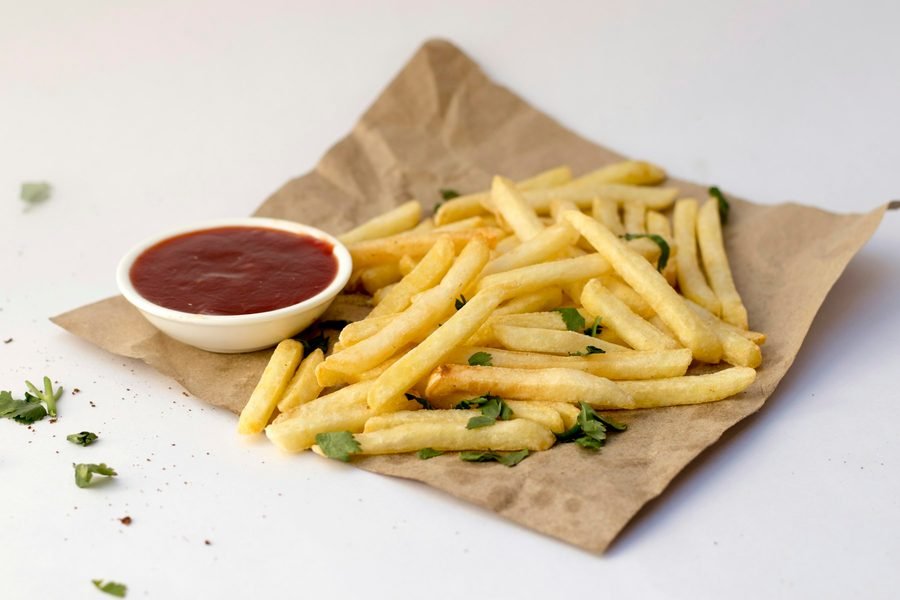
Wings travel badly. Wet sauces soften the coating from the moment they are applied, and twenty-five minutes in a sealed container finishes the job. Fries steam themselves soft within ten.
This is physics rather than a fault at the restaurant. Nothing about the kitchen changes; the journey does the damage.
So delivery costs roughly double and delivers food in worse condition than collection. Whether that is worth it is a genuine question — the point is that it should be a question rather than a default.
If you are ordering delivery anyway
<strong>Order dry rubs.</strong> Lemon Pepper, Garlic Parmesan, Louisiana Rub and Hot Honey Rub keep the skin crisp because there is no sauce. This is the single biggest improvement available.
<strong>Ask for sauce on the side</strong> if you want a wet flavour. Free, and you get the wing the kitchen made plus control over how much sauce goes on.
<strong>Ask for extra crispy.</strong> A longer fry gives firmer skin that holds up considerably better in a box.
<strong>Skip the fries</strong> or accept they will be soft. Cajun fried corn travels far better and is lighter.
The pick-up code is the one worth having
Where a platform offers a pick-up discount, that is the version to use. You avoid the delivery fee, the service fee and the tip entirely, and the code applies to a subtotal that is closer to in-store pricing.
A ten percent pick-up code on collection pricing frequently beats a flat $10 delivery code on inflated pricing, once the fees are counted.
Ordering ahead through the app and collecting is the cheapest route to this food that exists, and it also removes the fifteen-to-twenty-minute wait, since everything here is fried to order.
Frequently asked
Is Wingstop delivery more expensive?
Substantially. Menu prices on delivery platforms sit above in-store before fees, and then the delivery fee, service fee and tip go on top.
What travels best?
The dry rubs — Lemon Pepper, Garlic Parmesan, Louisiana Rub and Hot Honey Rub. Wet sauces soften the coating within minutes.
Is a pick-up discount code better than a delivery one?
Usually yes. It applies to lower base prices and you avoid all three fees.
Keep reading
Dry Rub vs Wet Sauce — Which Flavors Survive the Drive Home
Lemon Pepper travels. Hickory Smoked BBQ does not. Here is the full split.
Read →
The Seasoned Fries — and Why They Arrive Soggy
Good fries, ruined by a closed container. There is a simple fix.
Read →
The Cheapest Way to Eat Here
The cheapest meal is $6.29. The cheapest line is $1.49.
Read →